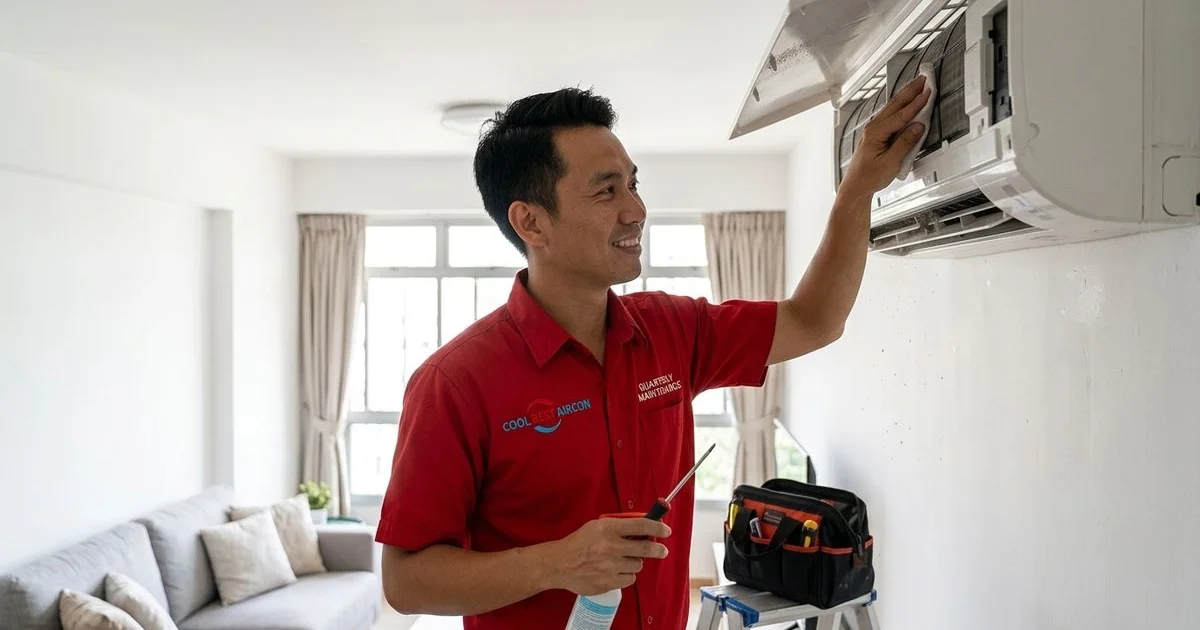
Singapore’s tropical climate pushes air conditioning units harder than almost anywhere else on the planet. With average humidity hovering between 70% and 90% year-round and daytime temperatures regularly hitting 31 to 33 degrees Celsius, your aircon barely gets a break. At Billy Aircon, we service HDB flats, condominiums, and commercial properties across the island every single day. We see the same warning signs over and over again, and catching them early saves our clients hundreds of dollars in avoidable repairs.
Here are the five clearest signs your aircon needs professional servicing right now.
Sign 1: Your Aircon Is Not Cooling Properly
You set the thermostat to 24 degrees, but the room stays uncomfortably warm. The air blowing from the vents feels lukewarm instead of crisp and cold. In Singapore, where your unit runs for eight to twelve hours daily, this problem escalates fast.
What Causes Poor Cooling
Several specific issues restrict your unit’s ability to lower the room temperature effectively.
- Dirty air filters: This is the most common culprit across Singapore homes. Clogged filters restrict airflow, preventing the evaporator coil from absorbing heat properly.
- Low refrigerant levels: A slow gas leak prevents efficient heat transfer. The system runs constantly without ever reaching your set temperature.
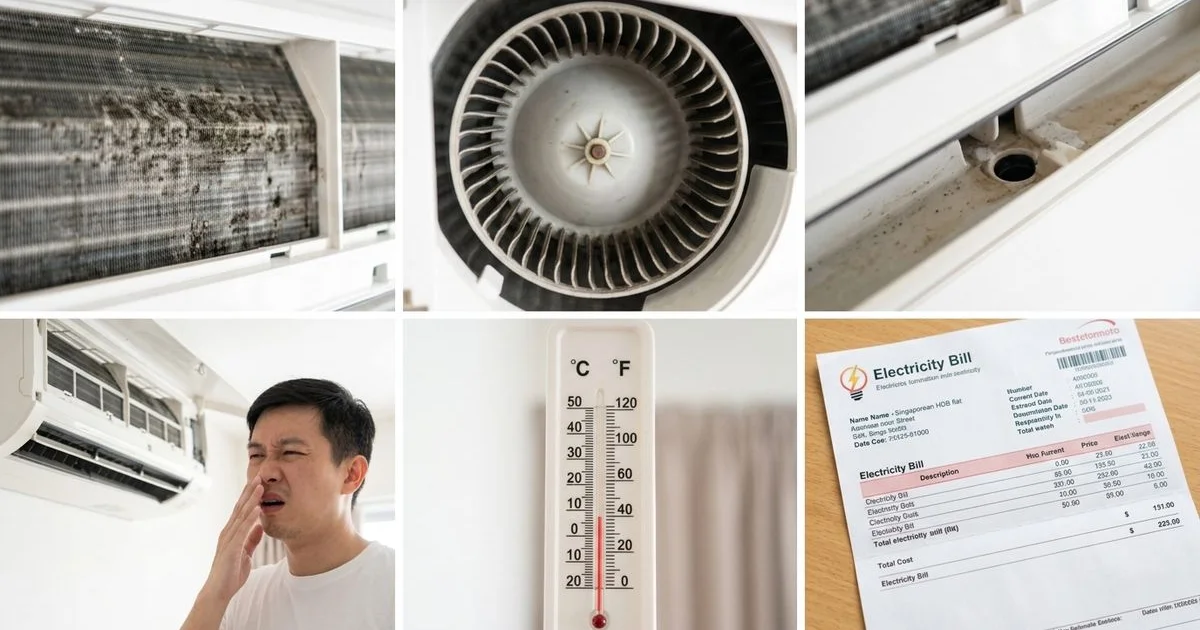
- Grime on the evaporator coils: Even with clean filters, tropical humidity accelerates grime buildup on internal coils. This barrier directly blocks the heat exchange process.
- Faulty compressor: The outdoor compressor might be struggling to pump refrigerant. This mechanical failure is less common but requires immediate attention.
Data-Driven Cooling Standards
The National Environment Agency (NEA) officially recommends setting your temperature to 25 degrees Celsius. Lowering the thermostat below 24 degrees forces the compressor into overdrive. Research shows that every single degree below 25 degrees increases your energy consumption by up to 10%.
What You Should Do
Your first step is cleaning your air filters manually. A basic 15-minute wash often restores normal airflow immediately. You will notice a difference in cooling power right away.
Our technicians recommend scheduling a professional servicing session if the problem continues. A proper diagnostic check will verify the internal coil condition and the refrigerant gas pressure.
Systems neglected for more than six months usually have heavily impacted coils. At that stage, a thorough chemical wash is required to strip away the built-up grime and restore the heat exchange process.
Sign 2: Water Leaking from Your Indoor Unit
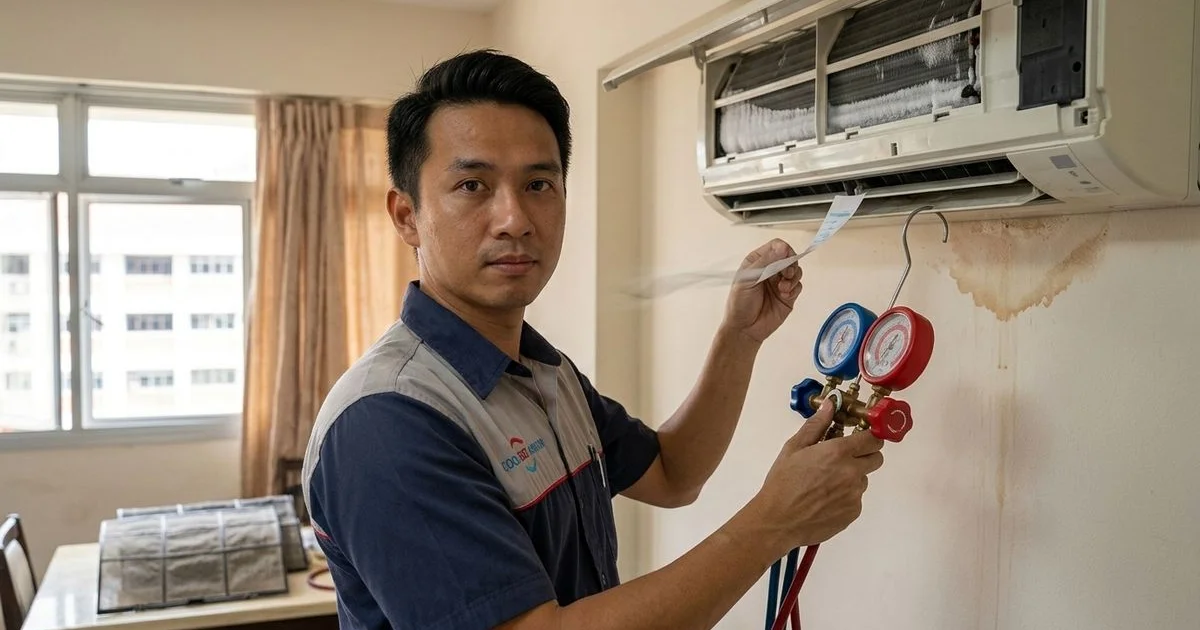
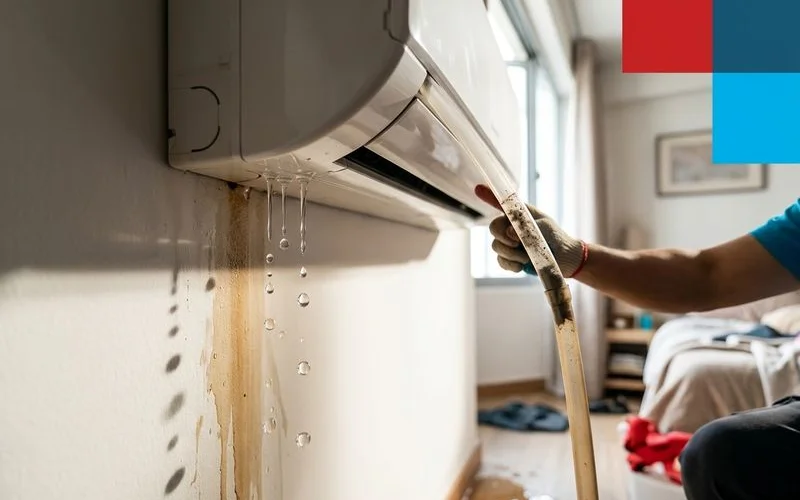
Noticing water dripping from your unit onto your floors or furniture is highly alarming. Drainage failures rank as one of the top maintenance issues in Singapore. The dense, year-round humidity creates a massive amount of internal condensation, and this is especially problematic in older HDB flats where drainage runs may be longer or poorly angled.
Common Causes of Water Leaks
- Blocked drainage pipes: The cooling process generates constant moisture. Dirt, dust, and algae mix with this water to form a thick sludge that clogs the exit pipe.
- Misaligned drainage trays: The internal tray must angle slightly in the direction of the drain. A shifted or dirty tray causes water to pool and overflow into the room.
- Frozen evaporator coils: Restricted airflow or low gas causes the coil temperature to drop below freezing. The resulting ice melts rapidly when the unit turns off, instantly overwhelming the drain pan.
What You Should Do
You must turn off the unit immediately to prevent electrical hazards and property damage. Water pooling inside the casing can easily short out the main control board.
Call a qualified technician for a proper water leak diagnosis and repair right away. Our teams use a specialised vacuum to clear the sludge from the entire drainage line. The final step involves flushing the system with an anti-bacterial solution to prevent the algae from returning quickly.
Sign 3: Strange or Unpleasant Smells
Air blowing from your vents should be completely odourless. A musty, sour, or foul smell indicates that something undesirable is growing inside the casing. Singapore’s persistent humidity creates the perfect breeding ground for mould and bacteria inside your aircon unit, making this a particularly common complaint across the island.
Identifying the Source of the Odour
Different smells point to different internal contaminants.
- Musty and stale odours: This points directly to mould and mildew. The dark, damp interior of the fancoil is the perfect breeding ground for mould spores, especially during the Northeast Monsoon season when humidity levels regularly exceed 90%.
- Sour or vinegar-like smells: This usually indicates a high concentration of bacterial growth in the drainage pan.
- Rotten or foul smells: Small pests like geckos or insects sometimes crawl inside the unit and die.
What You Should Do
A smelly aircon requires immediate sanitation. Standard filter cleaning will not remove biological growth from the deep internal fins.
You need to schedule a chemical wash to break down the biofilm. In 2026, the average cost for a professional chemical wash in Singapore ranges between S$80 and S$120 per unit. This process uses an alkaline-based solution to dissolve the grime and kill the bacteria completely.
For severe mould infestations, a full chemical overhaul is the only effective solution. Our specialists will dismantle the entire fancoil to pressure-wash every individual component. This completely resets the hygiene level of the system.
Sign 4: Unusual Noises from Your Unit
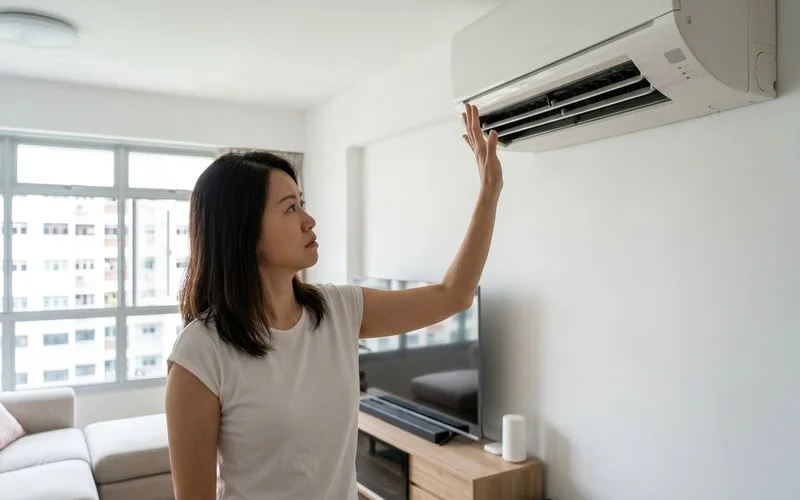
Modern cooling systems are engineered to operate quietly, typically producing around 20 to 30 decibels indoors. A healthy unit emits nothing more than a soft, consistent hum. Any new mechanical sound is a clear warning of internal friction or component failure. In tightly packed HDB and condo living spaces, these noises are especially noticeable and often disturb neighbours sharing the same wall.
Decoding Common Aircon Noises
Different sounds provide clues about the specific mechanical problem. Use this quick reference guide to identify the likely issue.
| Type of Noise | Likely Cause | Recommended Action |
|---|---|---|
| Rattling or Vibrating | Loose mounting brackets, a displaced front panel, or debris trapped inside the casing. | Check the external covers. Tighten any visible screws on the mounting plate. |
| Buzzing or Humming | Electrical faults, a failing starting capacitor, or a struggling fan motor. | Turn the unit off immediately to prevent electrical fires. Call a technician. |
| Grinding or Scraping | The fan motor bearings are completely worn out, causing metal-on-metal friction. | Stop usage immediately. The motor will burn out if it continues to run. |
| Continuous Clicking | A failing thermostat or a defective main printed circuit board (PCB). | Requires professional diagnostic testing of the electrical components. |
What You Should Do
Do not ignore these mechanical warnings. Continuing to run a grinding or buzzing unit will eventually destroy the motor or compressor.
Schedule a noisy aircon diagnosis to pinpoint the exact source of the friction. Replacing a failing bearing today is vastly cheaper than replacing an entire fan motor next week. We strongly advise cutting the power at the main isolator switch if you hear loud electrical buzzing.
Sign 5: Higher Than Usual Electricity Bills
If your SP Group invoice suddenly spikes without a change in your daily habits, your cooling system is the likely culprit. Air conditioning currently accounts for roughly 40% to 60% of an average Singapore household’s total electricity consumption. With SP Group tariffs sitting at 29.11 cents per kWh for early 2026, every watt of wasted energy hits your wallet hard.
The Cost of Inefficiency
A neglected system has to work twice as hard to lower the room temperature. Clogged filters and dirty coils force the compressor to run continuously. This extended running time translates directly into higher kilowatt-hour usage on your monthly SP Group bill.
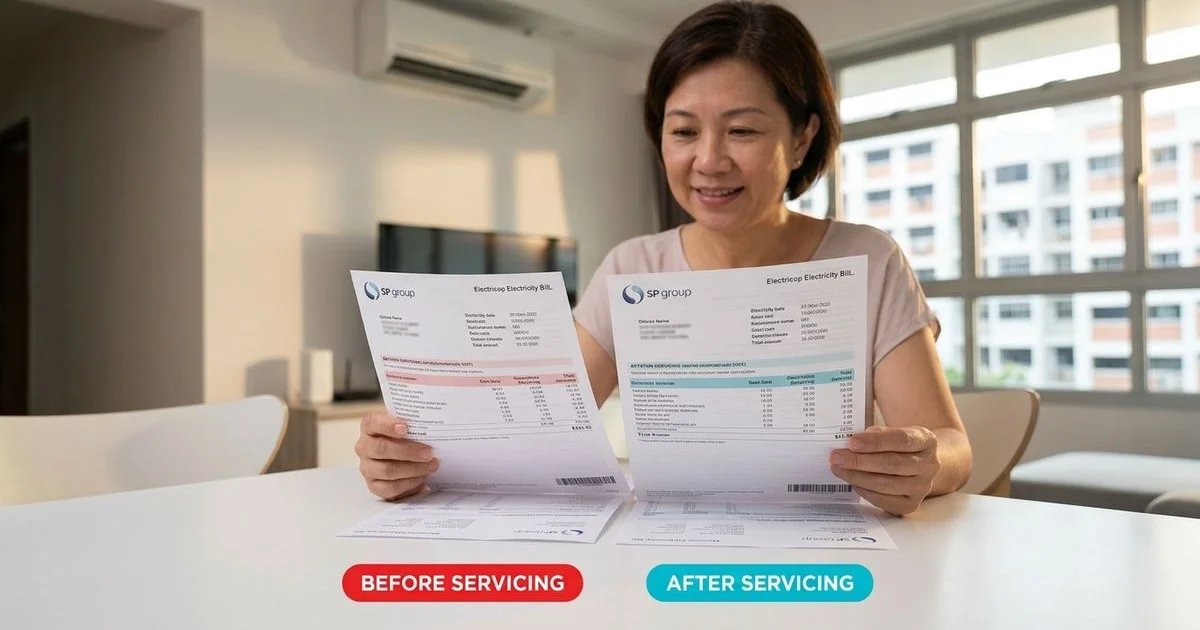
Industry data shows that routine maintenance reduces power consumption by 15% to 25% compared to an unserviced unit. For a typical 4-room HDB flat running a System 3 setup, that could mean savings of S$15 to S$25 every single month.
What You Should Do
Track your monthly usage and compare it to previous periods. You can learn more about how regular servicing lowers your electricity bill through scheduled maintenance.
Ask your technician to check the gas pressure and coil condition specifically. Also, evaluate the age of your equipment. The NEA banned the sale of older, less efficient R410A household units in late 2022. Upgrading to a modern 5-tick model with an excellent energy tick rating will permanently reduce your monthly operating costs.
Bonus Warning Signs
Watch for a few secondary indicators that signal an impending breakdown.
- Short cycling: The unit turns on and off every few minutes. This usually means the thermostat is reading the temperature incorrectly.
- Visible ice formation: Finding frost on the copper pipes or internal coils is never normal. It points directly to a severe refrigerant leak that requires a professional gas top-up.
- High indoor humidity: The room feels cold but sticky and clammy. The system is failing to dehumidify the air as it cools, a problem that is especially uncomfortable in Singapore’s naturally humid environment.
Prevention Is Always Cheaper Than Repair
Every major failure starts as a minor, invisible issue. You can prevent nearly all of these stressful situations with a regular quarterly servicing schedule. A proactive approach catches the small leaks and minor blockages months before they flood your living room or send your SP Group bill through the roof.
Our maintenance packages include a comprehensive inspection of your drainage, electrical, and cooling systems. The service process covers cleaning the vital components and calibrating the system to operate at peak efficiency. Every service call comes with a 90-day workmanship warranty for your peace of mind.
Do not wait for a minor rattle to become a total system failure. Contact Billy Aircon at 9182 5233 to restore your indoor comfort today. We serve HDB flats, condos, and commercial properties across Singapore, and we can often dispatch a team to your property on the exact same day.
Mr Chong
Founder & Lead Technician
Mr Chong founded Billy Aircon with over 18 years of hands-on aircon servicing experience in Singapore.